
Speakers
- Home
- Speakers
Speakers at Arts and Humanities Conference 2026
The 13th International Conference on Arts and Humanities (ICOAH) 2026 features a distinguished lineup of international speakers from academia, policy, creative industries, and interdisciplinary research fields. Bringing together renowned scholars, policymakers, artists, and practitioners, the conference provides a platform for sharing cutting-edge research, innovative practices, and critical perspectives that are shaping the future of the arts and humanities.
This Arts and Humanities Conference 2026 offers participants the opportunity to engage with thought leaders and global experts who foster meaningful dialogue, interdisciplinary collaboration, and transformative ideas. By addressing contemporary cultural, social, and technological challenges, the speakers contribute to impactful discussions and knowledge exchange, making ICOAH 2026 a premier global conference for advancing arts and humanities scholarship and practice.
Keynote Speakers

Prof. Robert Costanza
Institute for Global Prosperity (IGP), University College London (UCL)
Title: “Imagining and Creating a Sustainable Wellbeing Future”
Robert Costanza (PhD, FASSA, FRSA) is a professor of Ecological Economics at the Institute for Global Prosperity, University College London and a 2024 winner of the Blue Planet Prize. He is an Ambassador of the Wellbeing Economy Alliance (WEAll), co-founder and past-president of the International Society for Ecological Economics, and founding editor of Ecological Economics. He is the current editor in chief of The Anthropocene Review. Professor Costanza’s transdisciplinary research integrates the study of humans and the rest of nature to address research, policy and management issues at multiple time and space scales, from small watersheds to the global system. His areas of expertise include: ecological economics, ecosystem services, landscape ecology, integrated ecological and socioeconomic modelling, energy and material flow analysis, environmental policy, social traps and addictions, incentive structures and institutions. He is the author or co-author of over 600 scientific papers and 30 books, including his latest book: Addicted to Growth: Societal Therapy for a Sustainable Wellbeing Future. His work has been cited more than 185,000 times in Google Scholar with an h-index of 147. More than 360 interviews and reports on his work have appeared in various popular media and he has written over 75 articles for the popular press.

Prof. Donna Hewitt
Australia
Title: “Aesthetics of Automation: Authorship and the Crisis of the “Aura””
Donna Hewitt is a vocalist, composer, instrument designer, and Associate Professor of Music at the University of New England (UNE). Her creative practice, research, and teaching focus on creativity and emerging technologies, with particular expertise in electronic composition, AI-mediated creative practice, and performance innovation.
Hewitt designs and builds her own wearable instruments and custom interfaces — including the sensor- enhanced eMicmicrophone stand — which map gesture and voice to sound, lighting, and audiovisual media. Through these systems, she explores mediatized performance environments, human–machine collaboration, identity, and agency. As one of the few women internationally designing both hardware and software in music technology, she is recognised as a significant leader and role model in the field.
Her work has been presented at major international festivals and conferences and supported by national and international funding bodies, including the Australia Council and Canada’s SSHRC. Alongside her research-creation practice, she leads innovative higher-education programs that integrate creativity, AI, and new technologies into contemporary music practice.
Plenary Speakers
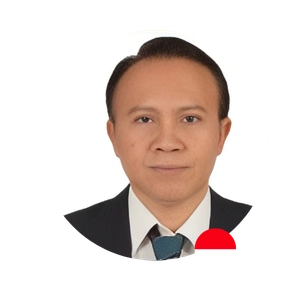
Prof. I Nyoman Sedana
Professor, ISI Denpasar, Bali, Indonesia
I Nyoman Sedana completed MA Brown University and PhD University of Georgia, is an artist/performer and professor at the Indonesian Arts Institute (ISI Bali), Director of Bali Module for International students, and Head Indonesia puppetry community, PEPADI. When high school (1982) Sedana started overseas performance in 4 countries of Europe. With undergraduate degree (1989) he started teaching and performing Balinese theatre in USA, Hongkong, Austria, Australia, UK, Bulgaria, India, Singapore, Thailand, and Philippine. Gratefully acknowledge grant research Yale ISM, ICCR India, IIAS Netherland, ARI-NUS Singapore, ASF Bangkok, Freeman Foundation, Asian Cultural Council, and the Education Abroad Program at UC Santa Barbara, Sedana is co-author of Balinese Performance (2007) and Performance in Bali: Then and Now in forthcoming 18th March 2026, both by Rutledge, while intensifying writing his forthcoming book on Linggayoni Art Philosophy. His articles as seen in Google-scholar https://scholar.google.co.id/citations?user=oHrhlY4AAAAJ&hl=id> in Indonesia, Singapore, India, recently in USA https://pirjournal.commons.gc.cuny.edu/2023/09/27/training-in-contemporary-balinese-wayang/ , https://pirjournal.commons.gc.cuny.edu/2023/10/04/workshop-report-wayang-workshop/>.
Artistic & Inspirational Speaker

Dr. Martin Lee
Saint Francis University, Hong Kong.
Dr. Martin Lee is one of the very few active music theorists in Hong Kong. Not only in the music discipline, but he also delivers research papers in the biblical and theological, as well as in music education and tertiary music curriculum development, conferences ranging from local to international levels. His recent research project includes the application of music semiotics in Messiaen’s music with respect to his synaesthesia, Catholic and theological beliefs. Currently, Lee is Assistant Professor and the Programme Leader of Higher Diploma in Music Studies at Saint Francis University and Caritas Bianchi College of Careers. He also serves as music examiner for The Associated Board of the Royal Schools of Music (ABRSM) and The International Baccalaureate (IB), and music specialist for the Hong Kong Council for Accreditation of Academic and Vocational Qualifications (HKCAAVQ).
Theme Leads
Prof. Donna Hewitt
Australia
Title: “Aesthetics of Automation: Authorship and the Crisis of the “Aura””
Donna Hewitt is a vocalist, composer, instrument designer, and Associate Professor of Music at the University of New England (UNE). Her creative practice, research, and teaching focus on creativity and emerging technologies, with particular expertise in electronic composition, AI-mediated creative practice, and performance innovation.
Hewitt designs and builds her own wearable instruments and custom interfaces — including the sensor- enhanced eMicmicrophone stand — which map gesture and voice to sound, lighting, and audiovisual media. Through these systems, she explores mediatized performance environments, human–machine collaboration, identity, and agency. As one of the few women internationally designing both hardware and software in music technology, she is recognised as a significant leader and role model in the field.
Her work has been presented at major international festivals and conferences and supported by national and international funding bodies, including the Australia Council and Canada’s SSHRC. Alongside her research-creation practice, she leads innovative higher-education programs that integrate creativity, AI, and new technologies into contemporary music practice.

Dr. Maria Vanessa E. Gabunada
Dean, Faculty of Humanities and Social Sciences, Visayas State University, Philippines
Title: “Pedagogies of Transition: Critical Literacy in Higher Education“
Dr. Maria Vanessa E. Gabunada is the Dean of the Faculty of Humanities and Social Sciences at Visayas State University (VSU) in Baybay City, Leyte, Philippines. Reappointed in January 2026, she continues to provide dynamic academic and civic leadership within the university. She previously served as Head of the Department of Arts, Languages, and Literature and is currently an Associate Professor in the Department of Liberal Arts and Behavioral Sciences. Dr. Gabunada earned her Ph.D. in English Language and Literature from Ateneo de Manila University as a CHED FDP-II scholar. Her scholarly work focuses on the Politics of Translation, Cebuano Literature, and Language Imperialism, reflecting her commitment to language, culture, and identity studies. Beyond academia, she actively promotes social responsibility and environmental advocacy, leading initiatives such as “Tindog 2026” and the project “Safeguarding the Integrity of Academic Writing,” which supports ethical writing practices among educators and students.
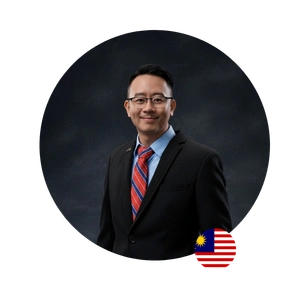
Dr. Kenneth Lee Tze Wui
Universiti Tunku Abdul Rahman, Selangor, Malaysia
Title: “Sociotechnical Systems: Algorithmic Governance and Equity“
Kenneth LEE Tze Wui is an academic and researcher whose work investigates the intersections of media, culture, and society in Southeast Asia. His research examines how digital communication, cultural identity, and nation-building shape social life, with a particular focus on minority representation, identity negotiation, and the dynamics of cultural resilience. Kenneth’s current scholarship includes studies on the Siamese Malaysian minority identity, exploring how this community navigates and negotiates its cultural and national belonging within a multicultural context. He has also analyzed the transformation of media landscapes, including the reconfiguration of cinema on digital platforms, the framing of socio-political issues in online and traditional media, and the role of media in public understanding during crises such as the COVID-19 pandemic.
He currently leads the Department of Mass Communication in the Faculty of Creative Industries at UTAR’s Sungai Long campus and contributes actively to the Tun Tan Cheng Lock Institute of Asian Studies. Kenneth engages in interdisciplinary scholarship through keynote addresses, panel discussions, and workshops, focusing on media freedom, mis/disinformation, digital governance, and cultural identity negotiation. His work bridges academic research, policy engagement, and public discourse, reflecting both local and regional perspectives. He is also affiliated with Aliran and the Southeast Asian Media Studies Association (SEAMSA), maintaining collaborative networks across Southeast Asia.
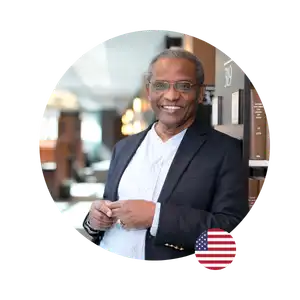
Prof. Emerit. Abdullahi Ahmed An-Na'im
School of Law, Emory University, USA
Title: “Metaphysics and Tradition: Spiritual Technologies”
Abdullahi Ahmed An-Na’im is the Charles Howard Candler Professor of Law at Emory University School of Law, Associate Professor in Emory College of Arts and Sciences, and Senior Fellow at the Center for the Study of Law and Religion at Emory University. An internationally renowned scholar of Islam and human rights, he specializes in international law, comparative law, human rights, and Islamic law, with a particular focus on cross-cultural perspectives.
His research explores constitutionalism in Islamic and African countries, secularism, and the relationship between Islam and politics. Professor An-Na’im has directed major research initiatives including Women and Land in Africa, Islamic Family Law, the Fellowship Program in Islam and Human Rights, and The Future of Sharia: Islam and the Secular State.
He continues to advance his influential theory presented in Islam and the Secular State (Harvard University Press, 2008), expanding scholarship on Muslims and secular governance and promoting a shift from state-centered to people-centered approaches to human rights.
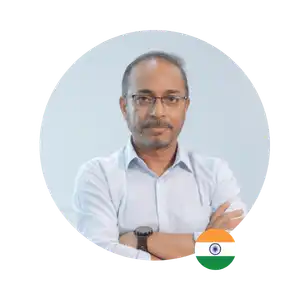
Prof. Anup Dhar
BML Munjal University, India
Title: “Ontologies of the Synthetic: Consciousness, Agency, and the Post-Human Subject”
Dr. Anup Dhar is a Professor of Philosophy at the School of Liberal Studies, BML Munjal University, India, where he engages in interdisciplinary research at the intersection of philosophy, culture, and psychology. He holds medical training and has developed a unique scholarly approach that integrates post-structuralist critiques of mental health with Lacanian psychoanalysis, postcolonial political thought, and medieval spiritual traditions. His work explores decolonized psychoanalysis and transformative philosophy, contributing to critical discussions on subjectivity, culture, and political thought. He also serves as a Permanent Fellow at The Hans Kilian and Lotte Köhler Center for Cultural Psychology and Historical Anthropology at Ruhr-University Bochum, Germany.
Dr. Dhar has an extensive publication record, including books and edited volumes on psychoanalysis, Marxism, and socio-cultural theory, and has held visiting professorships at leading institutions. His research continues to push boundaries in philosophy, cultural theory, and critical psychology.
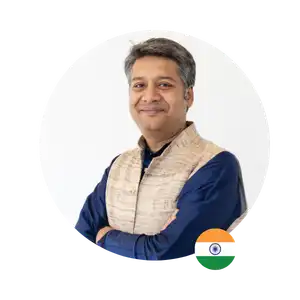
Dr. Abhishek Ghosh
K. J. Somaiya Institute of Dharma Studies
Somaiya Vidyavihar University
Mumbai
Title: “The Future of Discourse: Narrative, Language, and Translation“
Abhishek Ghosh is Dean of Faculty at the K. J. Somaiya Institute of Dharma Studies, Somaiya Vidyavihar University, Mumbai, and Director of the Institute for Vaishnava Studies, Gainesville, Florida. His research focuses on the history of Bengal Vaishnavism, the 19th Century writings of Bhaktivinoda Thakura, and dharma studies. He is currently the editor and manager of Springer’s Vaishnava Studies Series. He holds an MSt from Oxford University (2005) and a PhD from the University of Chicago (2014). He was assistant professor of Religious Studies at Grand Valley State University and a Senior Editor of the Journal of Vaishnava Studies (2021–2025).
Related Links
- Meet the committee members organizing the Arts and Humanities Conference 2026
- Discover the special events planned for the International Arts Conference 2026
- Check the call for papers and submit your research for consideration at ICOAH 2026
- Learn more about the vibrant location hosting the Arts and Humanities Conference 2026 in Bali, Indonesia